

History and heritage in Wrexham
A history and heritage trail round Wrexham: St Giles and Elihu Yale’s tomb, Erddig and Chirk Castle, lead mines, ironworks and steelworks, the Gresford miners, football and lager.
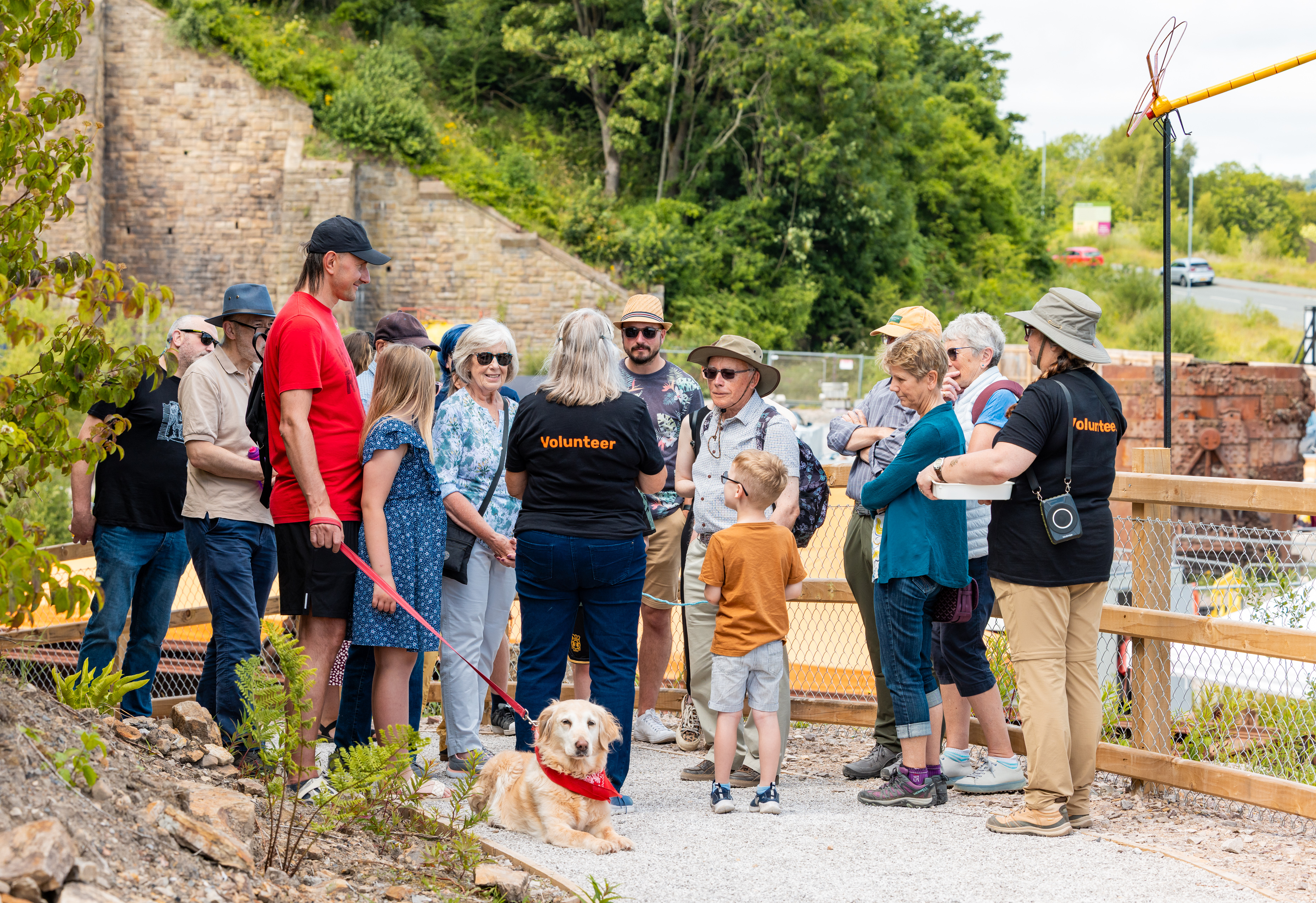
Visitors on a guided tour at Stori Brymbo, Wrexham
Wrexham’s history runs from a 300 million year old fossil forest to the coal, iron, steel and beer that built the town, and on to the birth of Welsh football. You can trace it in a medieval church, two great country houses, a restored lead mine, a steelworks heritage site and a miners’ theatre. This trail brings the best of it together, starting with our members.
THE MEDIEVAL CITY
St Giles Church is the largest medieval church in Wales, and its 16th century tower is one of the Seven Wonders of Wales. It’s open daily and free to visit. In the churchyard, west of the tower, is the Grade II* listed tomb of Elihu Yale, the benefactor after whom Yale University is named, who was buried here in 1721.
COUNTRY HOUSES AND A MARCHER CASTLE
Erddig: a National Trust country house that tells the story of the Yorke family and the servants who worked for them, with a 1,200 acre estate.
Chirk Castle: a 13th century Marcher fortress with 480 acres of parkland.
COAL, IRON AND STEEL
Stori Brymbo: on the site of the former Brymbo Steelworks, it tells a 300 million year story, from a fossil forest being excavated on site to the ironworks and steelworks that shaped the village.
Minera Lead Mines: restored engine houses and mine ruins in a 53 acre country park at the head of the Clywedog Valley, free to visit.
Bersham Ironworks, further down the Clywedog Valley, is where John “Iron Mad” Wilkinson patented a new way of boring cannon in 1774, making Bersham one of the most important ironworks in the world. Read more from Wrexham Council.
THE MINERS’ STORY
On 22 September 1934, an explosion at Gresford Colliery killed 266 men and boys. The Wrexham Miners Project in the historic Miners Rescue Station on Maesgwyn Road keeps their memory alive, with a miners’ museum, the Gresford memorial and the Rescue Café. In Rhos, The Stiwt is a theatre built by local miners, celebrating its 100th birthday in 2026.
FOOTBALL AND BEER
Football Museum of Wales and Wrexham Museum on Regent Street: the national football museum, opened in September 2026 in the city where the Football Association of Wales was founded. Entry is free, but book a timed ticket.
The Football Association of Wales was founded at the Wynnstay Arms on Yorke Street in 1876, and Wrexham AFC at the Turf Hotel in 1864. See our matchday guide.
Wrexham Lager: first brewed in Wrexham in the early 1880s and often described as the first lager brewed in Britain. Visit the brewery shop or book a tour.
ENGINEERING WONDERS
Thomas Telford’s Pontcysyllte Aqueduct, finished in 1805, is the longest and highest aqueduct in the UK and a UNESCO World Heritage Site.
SEE IT WITH A GUIDE
Pete Evans specialises in Wrexham’s industrial heritage and football story, and Wrexham City Tours and Tour Guide Katie run walking tours of the city’s history. See all our guided tours.
Checked on 8 November 2026. Opening times change, so please check with each site before you travel.